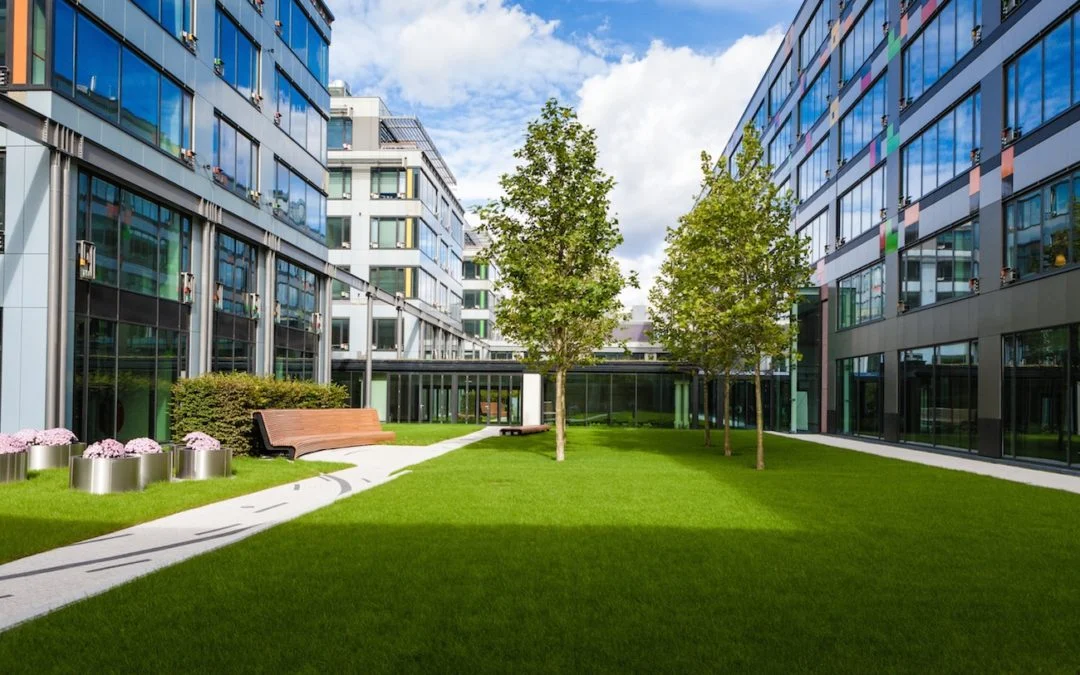
Commercial Artificial Grass Installation
Professional Commercial Artificial Grass Installation in Grand Prairie, TX.
Location Page
My dad spent his whole career laying St. Augustine sod for HOAs across Grand Prairie back in the 1980s. He knew every neighborhood — Dalworth, Westchester, the older blocks near Pioneer Parkway — and he knew which yards would fight you every summer. The mature pecan trees, the live oaks that throw shade from March through November, the clay-heavy soil near Mountain Creek Lake that holds standing water for days after a storm. Natural grass was always a negotiation in those yards, and he negotiated it for thirty years. I grew up watching that, and when I started my own crew I made a decision: I wanted to solve the problems those yards actually have, not just sell square footage. That's why Artificial Grass of Grand Prairie focuses specifically on shade-yard installs for families right here in the mid-cities. We're bilingual — English and Spanish — because a lot of Grand Prairie's best neighborhoods are home to multi-generational Hispanic families who want someone they can talk to plainly, in the language that's most comfortable. And we're honest about what synthetic turf can and can't do, because a homeowner who goes in with clear eyes ends up happy, and that's who calls us back.
Why Choose Us
Grand Prairie's mature pecan, live-oak, and post-oak canopy creates challenging install conditions. We've done hundreds of shaded yards and we know how to handle the drainage, pile selection, and base prep those spaces require.
Our team speaks English and Spanish fluently. For Grand Prairie's many bilingual and Spanish-first households, that means clear communication from the first call through the final walkthrough — no guesswork, no miscommunication.
We design yards for real use: pickup fútbol, Sunday cookouts, quinceañera prep, toddlers, dogs, and abuela's herb corner. We ask how you live before we start measuring.
Grand Prairie's clay-heavy soil near Mountain Creek Lake and the Trinity River bottomlands demands proper drainage work before any turf goes down. We don't cut corners on base prep — that's where the job either works or doesn't.
Benefits
Our Process
Step 1
We come to your Grand Prairie home, walk every corner of the yard, and listen to how you actually use it. We look at shade, drainage, and soil before recommending anything.
Step 2
We track where sun hits your yard, how long, and where water moves after a storm. This shapes every base-prep and product decision we make.
Step 3
We show you samples and recommend a turf grade matched to your traffic — light curb-appeal, heavy family use, or pet-specific with perforated drainage.
Step 4
We strip existing material, build a proper crushed-aggregate drainage base, lay and seam the turf, and infill and broom-finish the surface. Most residential jobs take 2–3 days.
Step 5
We walk the finished yard with you, answer every question, and leave a written care guide. We're available by phone for anything that comes up afterward.
FAQ
Yes. We work throughout Grand Prairie — Dalworth, Westchester, Westchester Park, Mira Lagos, Grand Peninsula, Lake Ridge, South Grand Prairie, North Grand Prairie, and everything in between. If you're on the Dallas County or Tarrant County side of the city line, we cover both.
It's actually an advantage in some ways. Shade slows UV degradation, which means your turf lasts longer. The challenge is managing leaf and hull drop from the pecan — a leaf blower a couple of times a week in fall handles most of it. We select pile heights and infill types that make cleanup easier in heavily shaded yards.
Absolutely. Our crew is bilingual — English and Spanish. We can take your call, do the walkthrough, and run the entire install in Spanish if that's more comfortable. Several of our best customers are Spanish-first households in Grand Prairie and we consider that a point of pride.
It depends on square footage, the turf grade you choose, and how much base prep the site needs. We give you a detailed written quote after the free walkthrough — no estimates over the phone before we've seen the yard, because the base prep requirements vary a lot between properties and we won't guess at your money.
Good drainage is the answer to moisture concerns. We build our base specifically for Grand Prairie's clay-heavy soils and the higher soil moisture near Joe Pool Lake. Properly drained turf doesn't hold moisture against the backing, which prevents mold and odor issues. It's a solvable problem — it just requires doing the base right.
Available Services
Professional Commercial Artificial Grass Installation in Grand Prairie, TX.
Professional Residential Artificial Grass Installation in Grand Prairie, TX.
Professional Artificial Grass Putting Green Design in Grand Prairie, TX.
Professional Artificial Grass Pet Area Installation in Grand Prairie, TX.
Professional Artificial Grass Maintenance Services in Grand Prairie, TX.
Professional Synthetic Turf Recycling Pickup in Grand Prairie, TX.
Request A Quote
Contact us with your address, service type, and timeline to get started.
Nearby Service Areas